
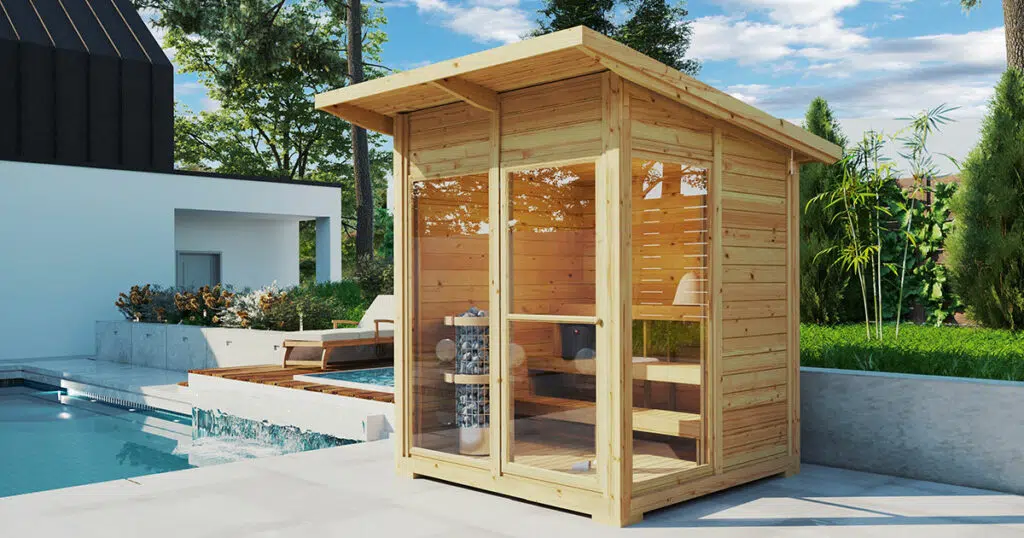
Over the past several years, outdoor saunas have made the leap from a luxury novelty to a genuinely mainstream home improvement in the UK. Gardens that used to only have sheds and patios now also include attractive, well thought, out wellness buildings that are used regularly all year round. Such a change mainly reflects changes in the broader culture concerning health, home investment priorities, and outdoor spaces people really want.
The pandemic was a major factor in the rapid increase of the trend’s popularity; however, the trend had existed prior to that. Pre-lockdown, the world was aware of the benefits of heat therapy and the general move towards gardens being used more like extensions of the living space than just landscaping, as evidence of people wanting more contact with and comfort in nature. Additionally, there was a growing interest in Nordic wellness practices. What 2020 and 2021 brought about was the disappearance of people’s indifference to the idea of wellness amenities as they saw them locked out of gyms, spas, and other facilities.
The Health Benefits That Drive Adoption
The cardiovascular benefits of consistent sauna use are more associated with health benefits and have been extensively studied rather than just being anecdotal.
Heat exposure significantly increases heart rate and cardiac output in a similar manner as moderate physical activity, thus giving the heart a real workout without impact or exertion. For a person experiencing an injury, with limited mobility, or simply an aging body that no longer recovers from exercise as well as before, this becomes a great way of healthcare.
Changes in sleep quality have been reported by users of saunas.
The drop in core temperature after the heat exposure in the sauna seems to induce the commencement of deeper, more restorative sleep cycles. Sauna beginners often report that they fall asleep faster and wake up feeling genuinely refreshed. For those with long-standing sleep dysfunction, this single benefit may justify an entire investment.
Why Outdoor Installations Work Better Than Indoor
Typically, UK homes do not have the kind of unused indoor space suitable for sauna installation without giving up functionality in other areas. If you turn a spare bathroom, bedroom, or basement corner into a sauna, you give up that space for its original use. On the other hand, gardens normally have areas that are not fully utilized, and a sauna building adds more functionality instead of replacing it.
The outdoor location changes the sauna experience in such a way that it becomes more desirable than similar indoor installations. Going from the heat to the fresh outdoor air gives a contrast that indoor saunas cannot offer. Coming out into a garden between rounds, especially in winter, offers a cooling stage that feels genuinely refreshing rather than just functional. This outdoor, indoor contrast is the main point of traditional sauna practice and is very hard to achieve inside a house.
Furthermore, if the sauna is located in a garden, moisture management is much easier. Saunas produce steam and humidity, which, if not properly contained, can cause damage to interior finishes and result in continuous maintenance issues. Outdoor buildings get natural ventilation, and any moisture gets released into the open air rather than requiring mechanical ventilation systems and careful detailing to prevent problems.
Design Evolution and UK Climate Adaptation
Early outdoor saunas used by UK homeowners were usually simple barrel or cabin style that were brought straight from Scandinavia with hardly any changes made for British conditions and tastes. These served the purpose well, but often did not fit the UK garden design styles and were not completely capable of dealing with the UK weather.
Contemporary suppliers have refined designs specifically for the UK market. Better insulation for less extreme but more persistent cold, improved weatherproofing for higher rainfall, and aesthetic approaches that complement British architectural styles rather than sit as obviously imported structures. Companies like Edenhut have developed expertise in designing outdoor saunas that work specifically for UK gardens, understanding both the practical requirements and aesthetic expectations of British homeowners.
The Economics of Home Installation Versus Membership
The economics come out quite interestingly when you compare putting in a garden sauna with the ongoing costs of gym or spa memberships that have a sauna.
There is a significant initial outlay for a good quality outdoor sauna, which can easily reach into the thousands of pounds for both the materials and the installation. Nevertheless, the costs of running it are very low, probably limited to just the electricity for heating and some minor maintenance once in a while.
A couple buying gym memberships mostly for the sauna might well spend nearly the same amount over a few years without having an asset at all. If we talk about family memberships where the facilities would be frequently used by different people, the economic argument for a home installation becomes even more compelling. The point of getting back your investment differs according to the usage but it is generally sooner than people anticipate.
The Social and Family Dimension
Outdoor saunas often become social hubs, and that’s a facet of their operation that adults tend to be quite surprised about when all they originally had in mind was their own wellness. Inviting a few friends for a sauna session followed by some time in the garden sets up completely different social dynamics than dinner parties or pub gatherings. Besides, in the company of a warm sauna, being relaxed, and an element of slightly unusual context, people tend to discuss more authentic topics, and the conversations are less of a performance than those at their typical han gatherings.
The use of saunas by family members differs greatly in pattern, but a sizeable number of homes discover that sauna sessions become precious family moments that really get teenagers and their parents sharing the same space without the intervention of any devices or distractions. The inevitable quiet time and the absence of screens set the stage for conversation to occur in a more natural way. Besides, some families sharing their experiences in an outdoor sauna reveal that it has been the most consistently accommodating place to have prolonged conversations that are hardly ever at home in adult domestic life.
Making the Investment Work Long-Term
Most of the outside saunas that keep giving you pleasure for years after being installed have some features in common that set them apart from those purchases that, at first, are used enthusiastically but then gradually are forgotten. Getting to know these aspects before signing up can really save you from turning this investment into an attractive yet expensive garden feature.
Whether the sauna becomes a part of your daily life or stays as an occasional one heavily depends on the positioning of the sauna, which allows the regular use to be really convenient without planning and preparation. A use without any mental preparation for going to the sauna yet, taking off shoes and coats, grabbing a sauna robe, etc., is a very likely evening sauna use. Designing a sauna and its access that require an extra effort in the first place will definitely repay you with your sauna being used.
