
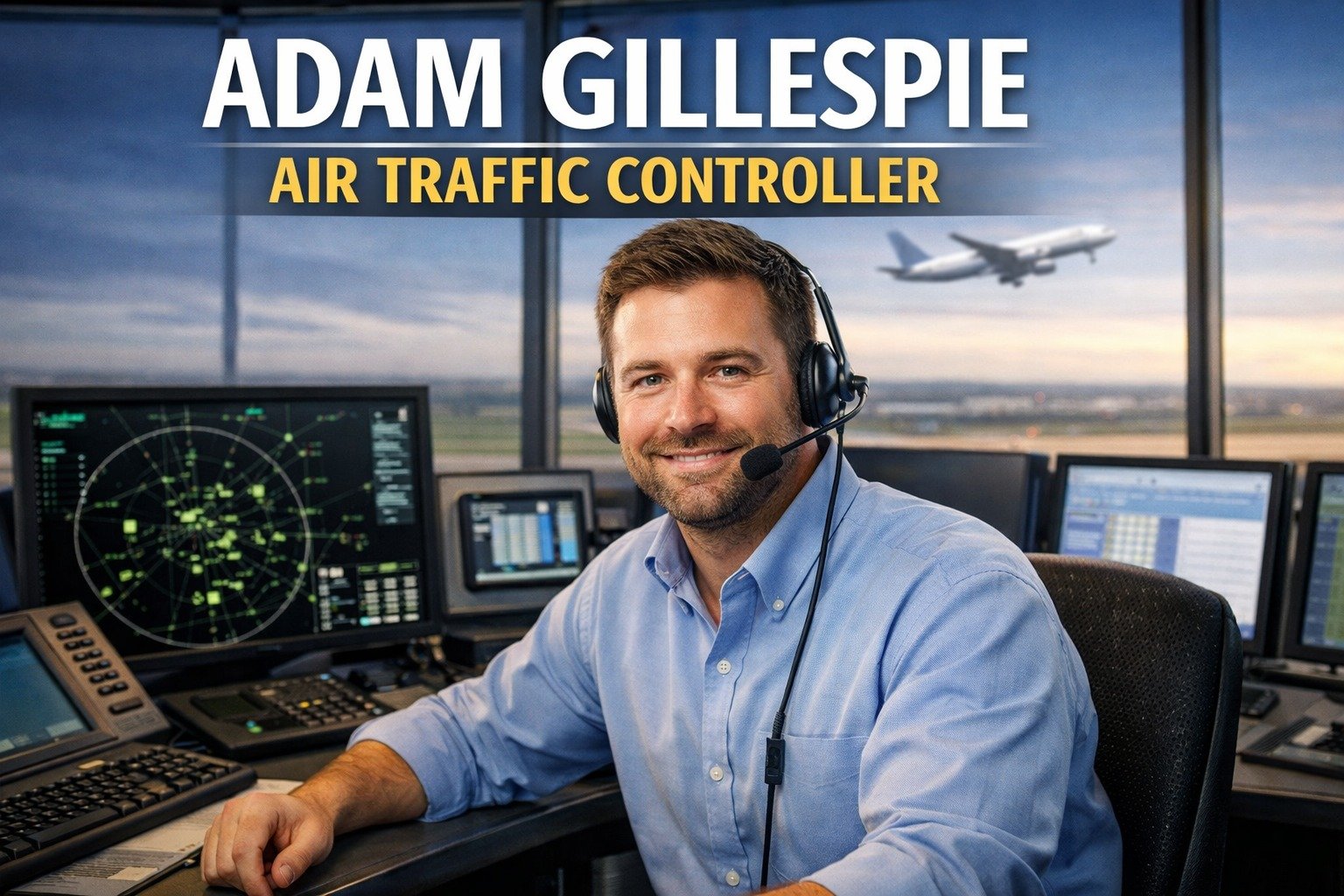
Air traffic controllers are the unsung heroes of the aviation industry. They manage, guide, and protect aircraft, ensuring that air travel remains as safe as it is efficient. In this article, we will focus on the role of Adam Gillespie, an air traffic controller, and explore the importance of air traffic control in the modern aviation landscape. Adam Gillespie may not be a household name, but his job is one that carries immense responsibility. While there may not be a plethora of public data surrounding his specific career, his story embodies the dedication and precision that air traffic controllers bring to their job.
Understanding Air Traffic Control
Before diving into Adam Gillespie’s journey, it’s essential to first understand what air traffic control (ATC) is. Air traffic control refers to the service provided by ground-based controllers who coordinate the movement of aircraft on the ground and in the air. Their primary goal is to prevent collisions and to ensure the safe and efficient passage of aircraft. Air traffic controllers handle take-offs, landings, and en-route traffic, maintaining communication with pilots throughout their flight.
Air traffic controllers work in various sectors of the airspace system, including approach and departure sectors, en-route centers, and ground operations at airports. They communicate with pilots, ensuring they are informed of any changes in the weather, traffic, or other conditions that might affect their flight paths.
Air traffic control requires a unique blend of skills, including the ability to think critically, stay calm under pressure, and process complex information quickly. It’s a high-stress job, but it’s also incredibly rewarding, as controllers play a crucial role in making sure millions of people reach their destinations safely each year.
Who Is Adam Gillespie?
While many air traffic controllers remain relatively unknown to the general public, they are often highly respected in the aviation industry. Adam Gillespie is one such individual. Though details about his career may not be widely available, his work as an air traffic controller is representative of the dedication required in this profession.
Adam Gillespie’s day-to-day life as an air traffic controller likely involves long hours, high-pressure situations, and a level of concentration that most people cannot fathom. He would be responsible for managing the airspace around an airport, ensuring that aircraft are safely separated, and guiding pilots as they make their approach for landing or departure.
The Life of an Air Traffic Controller
The life of an air traffic controller is one of responsibility and precision. A controller like Adam Gillespie likely spends much of his day at a radar screen, tracking aircraft as they make their way across the sky. This job requires a constant awareness of all the planes within the airspace he oversees.
The responsibilities of an air traffic controller can include:
- Managing Air Traffic: Ensuring that aircraft are separated and guided on the correct paths to prevent collisions. This involves a detailed understanding of flight patterns, weather conditions, and the needs of each individual flight.
- Communication with Pilots: Controllers need to communicate with pilots clearly and concisely, especially when weather conditions, air traffic, or other issues create challenges.
- Handling Emergencies: In cases of emergency, such as an aircraft in distress or a sudden weather shift, an air traffic controller must act quickly and decisively to ensure the safety of everyone involved.
- Adapting to Changes: The aviation environment is constantly changing, with shifting weather conditions, flight delays, and unexpected events. Adam Gillespie, like all air traffic controllers, must adapt to these changes on the fly.
The Importance of Air Traffic Control
Air traffic control is not only vital for ensuring that aircraft don’t collide with one another, but it also plays a key role in the efficiency of air travel. Proper air traffic management can reduce delays, improve fuel efficiency, and help airports handle more flights. With the increasing number of flights worldwide, air traffic controllers like Adam Gillespie are more crucial than ever.
When an air traffic controller such as Adam Gillespie is at work, there is no room for error. A missed communication or a failure to properly separate aircraft could result in catastrophic consequences. This makes the profession one of the most high-stakes jobs in the world. However, it is precisely because of professionals like Adam Gillespie that air travel remains one of the safest modes of transportation.
Adam Gillespie’s Contribution to Aviation Safety
While there is no public record detailing Adam Gillespie’s exact contributions to air traffic control, his work can be understood within the broader context of the profession. Air traffic controllers like Gillespie are often the first line of defense when it comes to ensuring that an aircraft reaches its destination safely. Whether he works at an airport tower or within an en-route sector, Adam’s job would involve constant monitoring and coordination.
In busy airspaces, like those surrounding major international airports, air traffic controllers can be responsible for managing dozens, if not hundreds, of aircraft at any given time. Adam’s ability to keep track of multiple flights, ensure that each one remains on course, and deal with unforeseen challenges would make him an indispensable part of the aviation industry.
The Challenges Faced by Air Traffic Controllers
Adam Gillespie, like other air traffic controllers, likely faces a variety of challenges on a daily basis. Some of these challenges include:
- High Stress: Air traffic control is known for its high levels of stress. The pressure of ensuring the safety of aircraft while managing multiple flights at once can be overwhelming. Adam Gillespie likely spends his shifts under constant pressure, yet remains focused on his tasks.
- Technological Demands: Modern air traffic control relies heavily on technology. Controllers must be adept at using radar, communication systems, and various software programs. The technology helps to keep air traffic organized and efficient but can also introduce challenges when systems malfunction or need to be upgraded.
- Mental Fatigue: The mental demands of air traffic control are immense. Adam Gillespie must be able to concentrate for long periods, process vast amounts of information, and make split-second decisions. This can lead to mental fatigue, which is why controllers work in rotating shifts to ensure they remain alert.
- Weather Conditions: Weather can be unpredictable and dangerous, and air traffic controllers must constantly monitor weather patterns to ensure safe flight routes. In adverse weather conditions, Adam Gillespie would have to manage delays, reroute aircraft, and ensure safe landing and takeoff procedures.
The Road to Becoming an Air Traffic Controller
Becoming an air traffic controller like Adam Gillespie requires a rigorous training program. In most countries, candidates must undergo specialized training that includes both theoretical instruction and practical experience. Some of the requirements to become an air traffic controller may include:
- Education: A high school diploma is the minimum educational requirement for most air traffic controller positions, though many positions require some level of higher education. Courses in mathematics, science, and communication are helpful for those pursuing a career in air traffic control.
- Training Programs: Many aspiring air traffic controllers attend training programs that last anywhere from a few months to several years, depending on the country and the specific role. These programs teach students how to manage air traffic, use radar systems, and communicate effectively with pilots.
- Certification: After completing training, air traffic controllers must pass various certification exams before they can begin working in the field. This ensures that controllers are equipped with the skills and knowledge necessary to perform their job safely.
- On-the-Job Training: Even after becoming certified, new air traffic controllers must complete on-the-job training, working alongside experienced controllers to gain practical experience. Adam Gillespie’s early years in the profession likely involved this type of mentorship.
A Day in the Life of Adam Gillespie
While we don’t know the specifics of Adam Gillespie’s daily routine, we can imagine what a typical day might be like for him as an air traffic controller. Adam likely starts his shift by reviewing the current air traffic conditions and preparing for the flights he will manage during the day. He will communicate with his colleagues to ensure that all flight plans are up to date.
Throughout the day, Adam will monitor the progress of various flights, ensuring they remain on course and making any necessary adjustments. He may need to handle emergencies, manage diversions, or assist pilots with landing and takeoff procedures. By the end of his shift, Adam will have safely guided hundreds of aircraft, ensuring their safe arrival at their destinations.
Conclusion
Adam Gillespie may not be a public figure, but his work as an air traffic controller plays an essential role in aviation safety. His dedication, skill, and focus are the backbone of the aviation industry, ensuring that millions of passengers travel safely every year. As we’ve seen in this article, the life of an air traffic controller is demanding, yet incredibly rewarding. Adam’s contribution to this industry may go unnoticed by the public, but it is no less significant. Without professionals like him, air travel would not be as safe and efficient as it is today.
For more articles on aviation, air traffic control, and the heroes behind the scenes, visit Newtly, your go-to source for insightful content about the world of aviation.
