
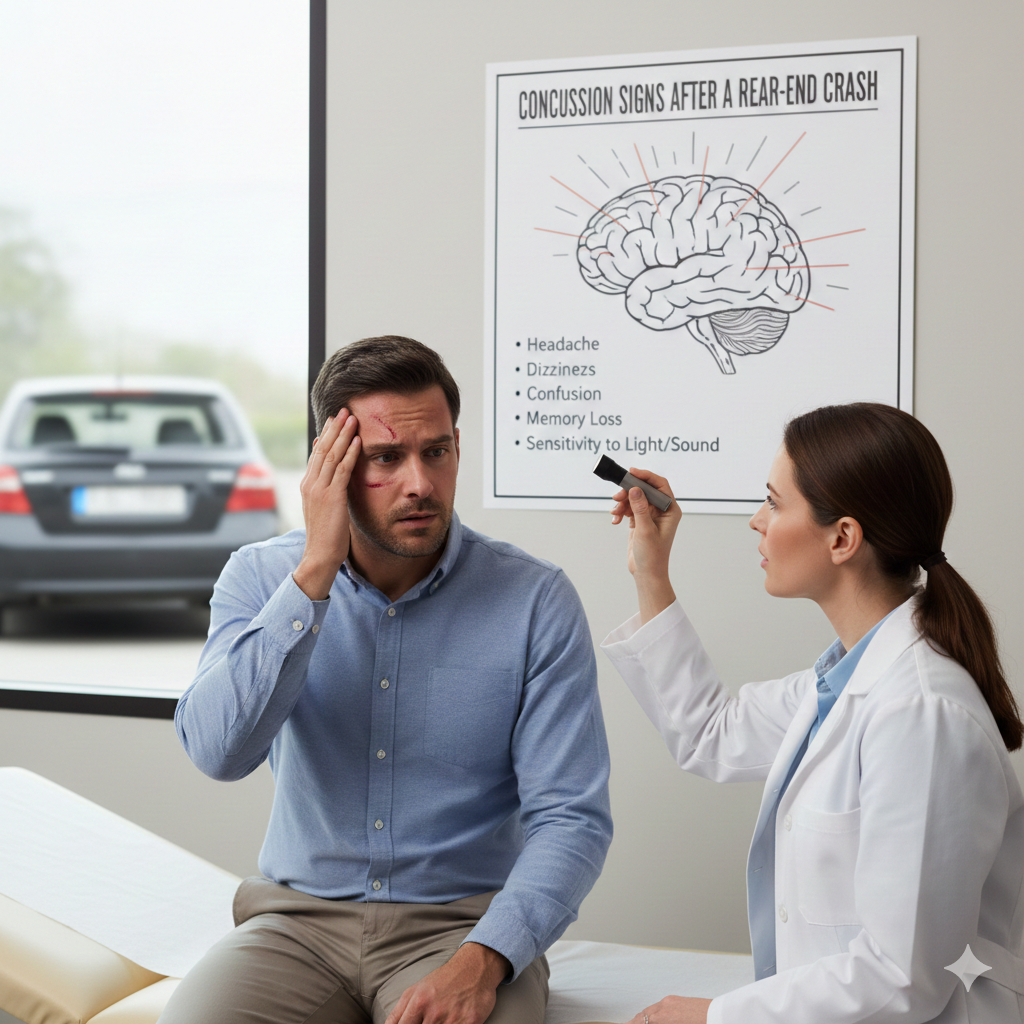
A rear-end crash does not need to look dramatic to cause a concussion. Even low-speed impacts can cause the brain to move suddenly inside the skull, leading to a mild traumatic brain injury. A skilled rear end collision lawyer sees this often: people feel “shaken up,” decline medical care, and only later realize something is wrong.
Concussions are frequently missed after rear-end crashes because there may be no visible injury and symptoms can be delayed. Knowing what to watch for matters, both for your health and for protecting your legal claim.
Why Rear-End Collisions Commonly Cause Concussions
In a rear-end crash, the body is thrown forward while the head snaps back and then forward again. This whiplash motion can cause the brain to strike the inside of the skull or twist in a way that disrupts normal brain function.
Airbags do not always deploy in rear-end crashes, and seatbelts restrain the body but not the head. As a result, concussions are common even when vehicles show limited damage.
Early Physical Signs to Watch For
Some concussion symptoms appear immediately, while others develop hours or days later. Common early physical signs include headaches that do not improve, pressure in the head, dizziness, nausea, vomiting, blurred or double vision, sensitivity to light or noise, and balance problems.
People often dismiss these symptoms as stress or muscle strain after a crash. When symptoms persist or worsen, that delay can complicate both recovery and documentation.
Cognitive and Mental Symptoms
Concussions often affect thinking and concentration. Trouble focusing, slowed reaction time, confusion, memory gaps, and difficulty following conversations are all red flags.
Many rear-end crash victims notice these symptoms when they return to work or daily tasks. Feeling mentally foggy or unusually forgetful after a crash is not normal and should be taken seriously.
Emotional and Behavioral Changes
Mood changes are a commonly overlooked sign of concussion. Irritability, anxiety, depression, mood swings, and emotional sensitivity can appear days after the collision.
Family members are often the first to notice these changes. Emotional symptoms are just as real as physical ones and should be documented by a medical professional.
Sleep Disturbances
Changes in sleep patterns are another common concussion indicator. This can include sleeping much more or much less than usual, difficulty falling asleep, or feeling constantly fatigued despite rest.
Sleep disruption affects healing and can make other concussion symptoms worse. Doctors often rely on sleep complaints to help diagnose and track recovery.
Delayed Symptoms Are Common
One of the biggest mistakes after a rear-end crash is assuming that no immediate symptoms mean no injury. Concussion symptoms frequently appear 24 to 72 hours later, once adrenaline wears off and inflammation develops.
Insurance companies often argue that delayed symptoms are unrelated to the crash. Medical evaluation and consistent documentation are the strongest defense against that claim.
Why Medical Evaluation Matters
There is no single test that definitively proves a concussion. Diagnosis is based on symptoms, neurological exams, and patient history. This makes early medical evaluation critical.
Seeking care promptly creates a record that links the concussion to the rear-end crash. Waiting too long gives insurers room to argue that symptoms came from something else.
How Concussions Affect Legal Claims
Concussions are real injuries, but insurers often downplay them because imaging may appear normal. A rear end collision lawyer understands how to document concussion claims through medical records, specialist referrals, and symptom tracking.
Concussions can affect work performance, memory, mood, and quality of life. These impacts are compensable under California law, but only when they are properly supported.
When to Speak With a Rear End Collision Lawyer
If you experience concussion symptoms after a rear-end crash, legal guidance matters early. Statements to insurance adjusters, gaps in treatment, and inconsistent reporting can all weaken a valid claim.
A rear end collision lawyer helps protect your rights by coordinating medical documentation, handling insurer communication, and making sure your injury is taken seriously.
How a Rear End Collision Lawyer Can Help After a Concussion
At Bojat Law Group, we regularly represent clients who suffered concussions in rear-end crashes that initially seemed minor. We understand how these injuries present, how insurers challenge them, and how to build claims that reflect the real impact on daily life.
If you were rear-ended in California and are experiencing headaches, dizziness, memory problems, or other concussion symptoms, call (818) 877-4878 for a free consultation. We are available 24/7, and you pay nothing unless we recover compensation for you.
