
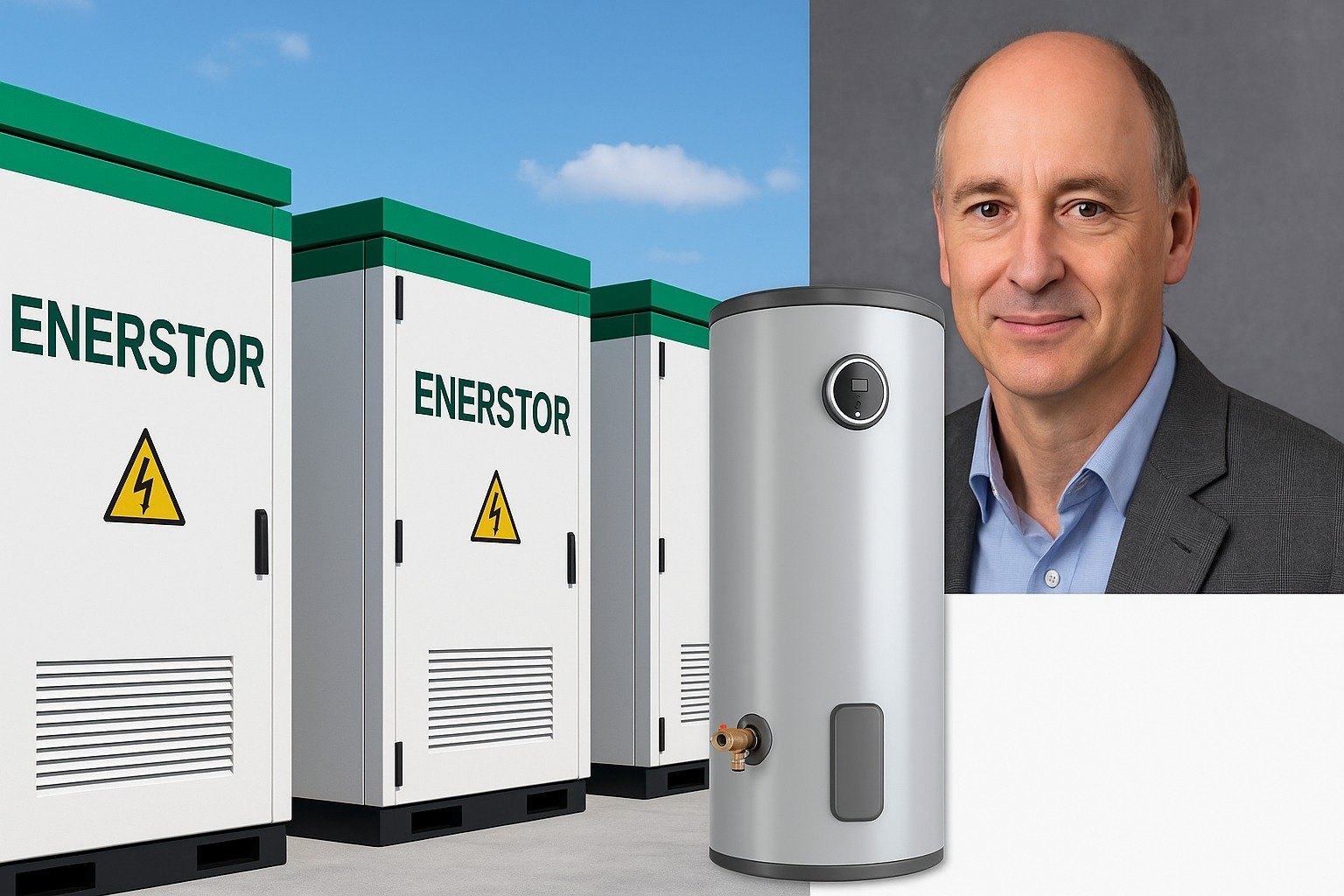
The word “Enerstor” pops up in several corners of the energy world—from grid-scale batteries and consulting to domestic hot-water design. This guide pulls those threads together in one place. We’ll unpack what “Enerstor” most commonly refers to in industry, highlight Enerstore/enerSTORE work linked with Desilvestro, and demystify how a mains-pressure hot-water system (sometimes marketed alongside “energy store/thermal store” ideas) actually works in homes. By the end, you’ll have a clear, practical map of a term that often gets used across different technologies.
“Enerstor” in the energy-storage ecosystem
At its core, Enerstor is used as a brand or shorthand for energy storage solutions and know-how. In public listings and startup directories you’ll see variants that emphasize battery energy storage systems (BESS), photovoltaics-plus-storage (PV+S), and industrial load-leveling. While the exact corporate identities can vary by country, the common denominator is the same: using storage to make energy cleaner, cheaper, and more reliable.
Why storage matters is straightforward:
- Renewables smoothing. Batteries soak up solar or wind when it’s plentiful and deliver it later, reducing curtailment and fossil peaker usage.
- Grid services. Storage provides frequency response, reserve, black-start support, and congestion relief.
- Behind-the-meter value. Businesses shave peak demand, ride through outages, and avoid penalties.
- Industrial process stability. Load-leveling protects machinery, lowers bills, and unlocks flexibility.
You’ll also encounter similarly named R&D efforts. One EU-funded project called Enerstor focused on a power-storage levelling module for the machine-tools industry, reflecting the same principle—using storage to flatten peaks and stabilize power quality in factories.
Enerstore / enerSTORE and the Desilvestro connection
If you’ve searched for “enerstore desilvestro” you’re probably seeing references to enerSTORE (Enerstore Consulting Ltd, New Zealand) and Johann (Hans) Anton Desilvestro.
- Enerstore Consulting Ltd (NZ) is listed with Johann Anton Desilvestro as director; the company trades as enerSTORE Consulting. Public company records show its scientific/technical services focus and include contact details and website.
- Hans Desilvestro appears as Director, enerSTORE Consulting on Google Scholar, publishing around solar cells, batteries, and electrochemical impedance—an R&D skill set that aligns with energy storage consultancy.
- A Bloomberg career entry also links Desilvestro to Enerstore Consulting and prior chief-scientist roles in PV materials—useful context if you’re tracing the technical pedigree behind the advisory work. Bloomberg
What that means in practice. When you see Enerstore/enerSTORE + Desilvestro, it’s typically a consulting or technical-advisory lens on storage: feasibility studies, chemistry/architecture selection, lifetime modeling, system controls, or PV-storage integration. The consulting angle is important in markets moving from pilot projects to bankable deployments, where choices about battery chemistry (LFP vs NMC), degradation pathways, warranty/throughput terms, PCS selection, and EMS algorithms materially affect lifetime value.
Architecting a modern BESS (what “Enerstor” solutions often entail)
Whether grid-scale or behind-the-meter, most Enerstor-type builds follow a similar architectural stack:
- Cells & modules. Typically lithium-ion (LFP/NMC), chosen for the use case (cycle life, C-rate, thermal stability, cost/kWh).
- Battery racks/containers. Thermal management (liquid or forced-air), fire detection/suppression, and access for service.
- Power conversion system (PCS). Bi-directional inverters that interface with the AC side; increasingly DC-coupled in PV plants to minimize conversion losses.
- Battery management system (BMS). Cell balancing, protection, telemetry; integrates with site EMS.
- Energy management system (EMS). Dispatch logic, forecasting, market participation (arbitrage, frequency response), and on-site loads (EV chargers, chillers, compressors).
- Safety & compliance. Standards, spacing, ventilation, emergency response plans—non-negotiables for insurability and permitting.
A consulting-driven build will typically begin with a use-case and tariff analysis (what services pay in this market?) and a techno-economic optimization (sizing power vs energy, expected throughput, degradation curves, augmentation plan). Decisions here commit most of the lifetime value.
The other “Enerstore”—mains-pressure hot-water systems as an energy store
Searches for “enerstore mains pressure hot water system” usually surface material about mains-pressure cylinders, thermal stores, or unvented cylinders. While brands vary by country, the engineering ideas are consistent—and the “energy store” concept is literal: you’re storing energy as hot water for later use.
How mains-pressure hot water works
- In a mains-pressure system, hot water is delivered at the same pressure as your cold mains, so multiple showers/taps can run without dramatic pressure drop. This is the dominant modern standard in NZ/UK markets.
- Unvented cylinders are sealed vessels heated by electricity, gas, or solar; thermal stores hold primary hot water and use an internal coil/plate exchanger to produce potable hot water at mains pressure on demand. Both deliver robust flow; the internal hydraulics differ.
- Product lines from well-known makers (e.g., Rheem, Rinnai in NZ) show the category’s maturity—stainless or enamel-lined tanks, outside-installable models, and compatibility with heat pumps and solar thermal.
Why homeowners call it an “energy store”
A cylinder is a thermal battery: it absorbs heat when tariffs are cheap (off-peak), sun is shining (solar thermal or PV diverter), or a heat pump is most efficient, and then releases that heat as hot water later. That strategy:
- Cuts bills (shift heating to cheaper periods),
- Improves comfort (steady pressure and flow), and
- Pairs with renewables (store solar heat instead of dumping).
Thermal store vs. unvented cylinder (quick compare)
- Thermal store
- Pros: Excellent with multi-fuel inputs (solar thermal, wood stove, boiler, immersion), mains-pressure hot water via a heat exchanger (no potable water sitting in the tank).
- Cons: Slightly more complex; exchanger sizing matters for flow rates.
- Unvented cylinder
- Pros: Simpler path to high flow at mains pressure; well-established supply chains and installers.
- Cons: Potable water lives in the tank; must manage expansion and anti-legionella cycles.
If you’re adding a PV array or a heat pump, the cylinder + smart controls route is often the easiest “first energy store” for a home—an elegant, durable complement to (or substitute for) a chemical battery.
Bridging the two worlds—what “Enerstor” means for buildings & industry
It’s not a coincidence that Enerstor appears both in grid storage and hot-water contexts: both are practical energy-storage strategies, just at different temperatures and timescales.
- Factories & campuses. A BESS can soak up cheap or renewable electricity and release it during peaks; a thermal store can pre-heat water (or even chilled water/ice) to shave HVAC and process loads later.
- Homes & small business. A well-sized mains-pressure cylinder, possibly with a PV diverter or heat-pump water heater, is the simplest way to monetize daytime solar kWh and reduce evening grid draw.
- Decarbonization. Both pathways reduce reliance on gas peakers or instantaneous fossil heat, enabling higher renewable penetration and lower bills.
This is where an Enerstore/enerSTORE-style consulting approach pays off: mapping tariff structures, carbon intensity by hour, and on-site demand to the right mix of electrical storage (kW/kWh) and thermal storage (litres/°C)—plus the controls to orchestrate both.
Buying & specifying—checklist for decision-makers
Whether you’re scoping a BESS or a mains-pressure cylinder/thermal store, the best outcomes come from disciplined specification:
- Define the use cases. Arbitrage, peak shaving, backup, frequency response (BESS); or hot-water peak demand, solar utilization, low-noise comfort (cylinders).
- Model the economics. Simulate dispatch and seasonal behavior, include degradation (batteries) or standing losses (cylinders), and stress-test with tariff and usage changes.
- Right-size the system. Oversizing can kill ROI; undersizing misses value. Balance power (kW) and energy (kWh) in BESS; balance storage volume and recovery rate (element/heat-pump power, exchanger capacity) in cylinders.
- Plan for safety & compliance. Fire codes and spacing (BESS); pressure/temperature relief, expansion vessels, scald protection, and legionella control (cylinders).
- Validate the hardware. Look for proven chemistries and bankable warranties (BESS), and for reputable cylinder makes (enamel or stainless) with local spares and installers.
- Controls matter. A mediocre system with smart control will often beat a premium system run poorly. Prioritize EMS (for BESS) and tariff/PV-aware controls (for hot water).
Frequently mixed-up searches—what to know
- “Enerstore desilvestro.” This points to enerSTORE Consulting (NZ) and Johann (Hans) Desilvestro, whose public records and scholarly footprint connect storage expertise with the brand.
- “Enerstore mains pressure hot water system.” This generally lands on mains-pressure cylinders and thermal stores—a domestic energy-storage strategy using hot water at full mains pressure, common in NZ/UK.
- Brand ambiguity. You may see similarly named firms or product lines using “Enerstor/Enerstore.” Always verify the jurisdiction, corporate entity, and product scope before you assume they’re the same company.
Bottom line
“Enerstor” sits at the intersection of two big energy trends: the rise of battery storage for grids and businesses, and the rediscovery of thermal storage at home via mains-pressure cylinders and thermal stores. On the industrial side, consulting-led Enerstore/enerSTORE efforts associated with Desilvestro reflect the discipline it takes to make storage projects pencil out. At the household level, mains-pressure hot-water systems are the original “energy store”—easy to integrate, simple to live with, and highly effective when paired with PV or heat-pump technology. Together, they show that “storage” isn’t one product; it’s a portfolio of tactics that, when designed well, deliver comfort, resilience, and lower bills.
Written By Newtly Team
You May Also Read: Choosing the Right Strength of Nicotine Pouches
