
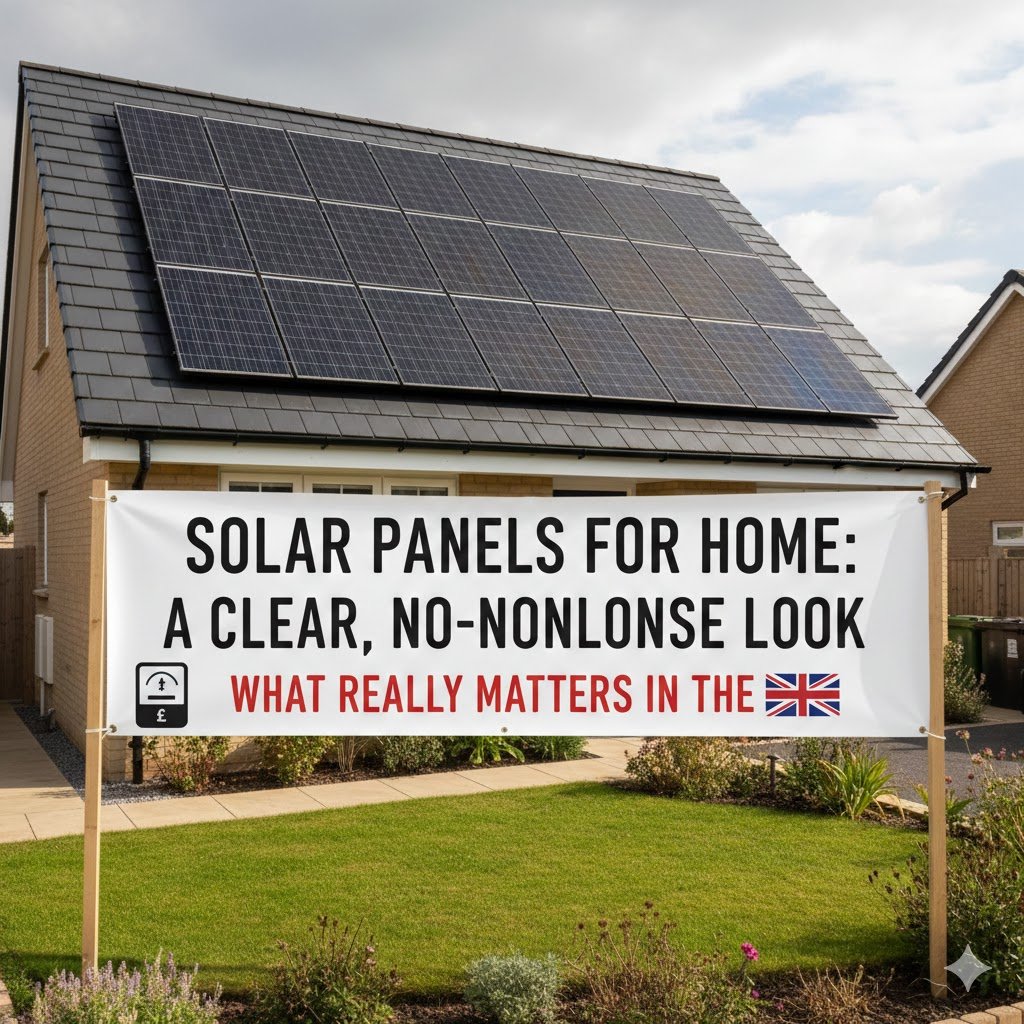
The conversation around the solar panel has shifted fast. What used to feel like a specialist upgrade is now part of mainstream home planning, especially as households rethink how they use electricity day to day. Still, for many people, the decision isn’t simple. There’s a lot of noise, plenty of myths, and not enough straight answers.
If you’re exploring solar panels for home use in the UK, this guide focuses on the bits that genuinely affect whether solar fits your property and routine. No hype, no hard sell — just practical clarity.
Start with the right question: does solar suit your home?
A solar panel system isn’t “good” or “bad” in isolation. It performs well when it matches three things:
- Your roof
- Your daylight exposure
- Your energy habits
When those align, solar becomes a quiet contributor to everyday living. When they don’t, even a technically sound setup can feel underwhelming. So the best first step is understanding fit, not trend.
What a solar panel can (and can’t) do in UK conditions
Let’s address the obvious worry: British weather.
Solar panels work off light, not heat. That means they can generate electricity on cool or overcast days. However, output naturally changes through the year.
What to expect:
- Summer brings longer production windows because daylight lasts well into the evening.
- Winter reduces total generation due to short days and lower sun angles.
- Cloudy days still produce power, just less than bright ones.
In other words, solar won’t turn your home into an off-grid cabin. But it can materially reduce how much electricity you need to import from elsewhere across a full year.
Roof suitability: the real deal-breakers
Most roofs that look “average” from the street can still be suitable. The question is which parts of the roof are usable and how panels can be arranged.
Orientation
- South-facing roofs are generally the most productive across the year.
- East and west roofs can perform strongly too, depending on usage patterns.
- North-facing roofs are usually less effective, but may still play a role in split layouts.
Shading
Shading matters more than orientation. Even a well-aimed roof loses effectiveness if heavily shaded.
Common shade sources include:
- tall trees
- chimneys
- nearby buildings
- dormers or roof features
Designers normally work around shaded areas rather than forcing panels into weak spots.
Roof condition
Solar panels are long-life fixtures. So your roof should be ready to host them long-term.
A suitable roof is:
- structurally secure
- not close to major replacement
- accessible for safe installation
If a roof needs serious work soon, it’s usually better to fix that first.
How your household routine affects solar performance
A solar panel system follows one simple rule: the electricity you generate is used at home first. Any remaining energy is exported or stored, depending on your setup.
That makes timing more important than most people realise.
Solar fits neatly into homes that:
- use appliances during daylight hours
- have someone in the house through the day
- can shift some flexible loads earlier
- plan to add EV charging or electric heating later
Even minor habit adjustments can increase how much of your own solar power you use directly.
Battery storage: when it helps, and when it doesn’t
Batteries get a lot of attention, but they’re not essential for every household. A solar-only setup still works well in many cases.
A battery tends to be useful if:
- most electricity use happens after sunset
- you frequently generate more power than you consume in the day
- you want to keep more solar for evening routines
- your home is adding electric loads over time (like EVs)
Many households choose to add storage later once they’ve seen their real-world generation pattern. Planning for battery compatibility upfront keeps that option open.
Exporting unused energy: understanding SEG
If your home generates more electricity than it uses, the surplus can be exported to the grid. Under the Smart Export Guarantee (SEG), eligible exports may be credited by participating suppliers.
Key point: SEG is a secondary benefit, not the main reason solar works. The primary value comes from powering your home directly during daylight hours.
Myth check: three misunderstandings worth binning
Even now, a lot of people delay solar because of ideas that don’t hold up.
Myth 1: “Solar doesn’t work in the UK.”
It works whenever there’s daylight — and the UK has plenty of that, even through cloud.
Myth 2: “If my roof isn’t south-facing, it’s pointless.”
East/west systems can still be highly effective, especially for homes with matching usage patterns.
Myth 3: “You need a battery for solar to be worthwhile.”
Batteries help some households; others do just fine without them.
A simple decision checklist for homeowners
Before you go deeper, it helps to do a quick self-screen based on the factors that matter most.
Ask yourself:
- Is my roof mostly unshaded for a good part of the day?
- Is the roof in solid condition for the long haul?
- Do we use electricity during daylight hours?
- Are we likely to add more electric appliances in future?
- Do we prefer steady, low-maintenance upgrades over complex ones?
If you’re answering “yes” to most of these, solar is likely a natural fit.
Conclusion
A solar panel system in the UK isn’t about chasing perfect weather or overnight transformation. It’s about using the daylight you already get to power your home more efficiently, in a way that fits your roof and routine.
For households with good light exposure, a stable roof, and some daytime usage, solar panels for home use can be a practical, durable improvement that quietly supports modern living through every season.
