
Wireless charging has quickly moved from a novelty to a daily convenience for Apple users. With iPhones supporting MagSafe-style charging and Apple Watch relying entirely on wireless power, many users now wonder whether a wireless charging power bank is truly worth the investment. Beyond removing cables, these power banks promise flexibility, portability, and cleaner setups. To decide if they’re right for you, let’s look at the real advantages, and use cases along with how well-designed options, such as those from Anker, fit into the Apple ecosystem.

Is Wireless Charging Really Practical for Apple Users?
To understand the value, it helps to break down how wireless charging power banks perform in everyday Apple scenarios.
Seamless Convenience for Daily Use
The biggest benefit of a wireless charging power bank is ease of use. Simply snap or place your iPhone onto the charger and power starts flowing—no cables required. This is especially helpful when you’re commuting, walking, or working at a café. For Apple users who already enjoy the cable-free experience at home, extending that convenience to on-the-go charging feels natural and intuitive.
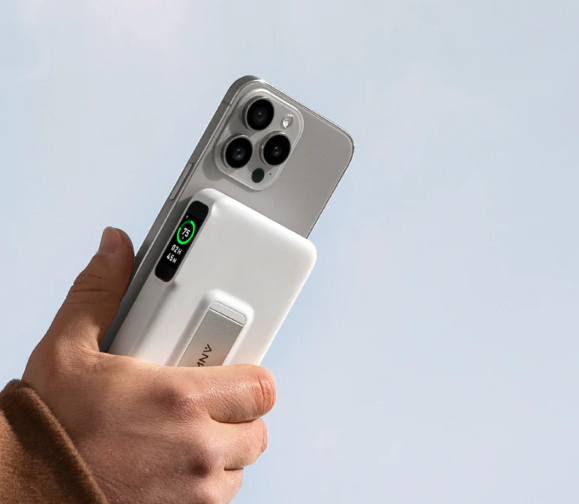
Designed Around Apple’s Charging Standards
Wireless power banks built with Apple users in mind support MagSafe or Qi2 standards, ensuring proper alignment and stable charging. This prevents energy loss caused by misplacement and keeps charging speeds consistent. Anker’s magnetic wireless power banks, for example, are engineered to align perfectly with iPhone models, making them feel like an extension of Apple’s own accessories rather than a workaround.
Reduced Cable Clutter and Better Portability
Carrying fewer cables can make a surprising difference. Wireless charging power banks eliminate the need for separate charging cords, reducing clutter in bags and pockets. Many models are slim enough to attach directly to the back of an iPhone, turning the phone and power bank into a single compact unit. For travelers or minimalists, this streamlined setup is a major advantage.
Charging Speed: Good, but Not Always the Fastest
One common concern is speed. While modern wireless charging has improved significantly, wired USB-C charging is still faster in many cases. That said, for topping up your battery during the day, wireless speeds are often more than sufficient. Many Apple users find that the convenience outweighs the small difference in charging time, especially when quick cable-free boosts are all that’s needed.
Multi-Device Flexibility for the Apple Ecosystem
Wireless charging power banks aren’t just for iPhones. Some models include dedicated Apple Watch chargers or additional USB-C ports, allowing you to charge multiple Apple devices at once. This is ideal for users juggling an iPhone, Apple Watch, and AirPods. Instead of carrying separate chargers, one well-designed power bank can handle everything efficiently.
Safety and Battery Health Considerations
High-quality Apple wireless power banks incorporate advanced safety systems to manage heat and power output. This is particularly important for Apple devices, which are optimized for battery longevity. Anker’s charging power banks, for instance, use intelligent temperature monitoring and power regulation to keep devices cool and protected, ensuring that wireless convenience doesn’t come at the cost of long-term battery health.
Conclusion
So, is a wireless charging power bank worth it for Apple users? For many, the answer is yes. While wired charging still holds the edge in raw speed, a wireless apple power bank excels in convenience, portability, and everyday practicality. They integrate smoothly with Apple’s charging standards, reduce cable clutter, and make on-the-go charging effortless. If you value simplicity and seamless use across your Apple devices, investing in a reliable wireless charging power bank, especially a well-designed one from brands like Anker, can be a smart and satisfying upgrade.
