
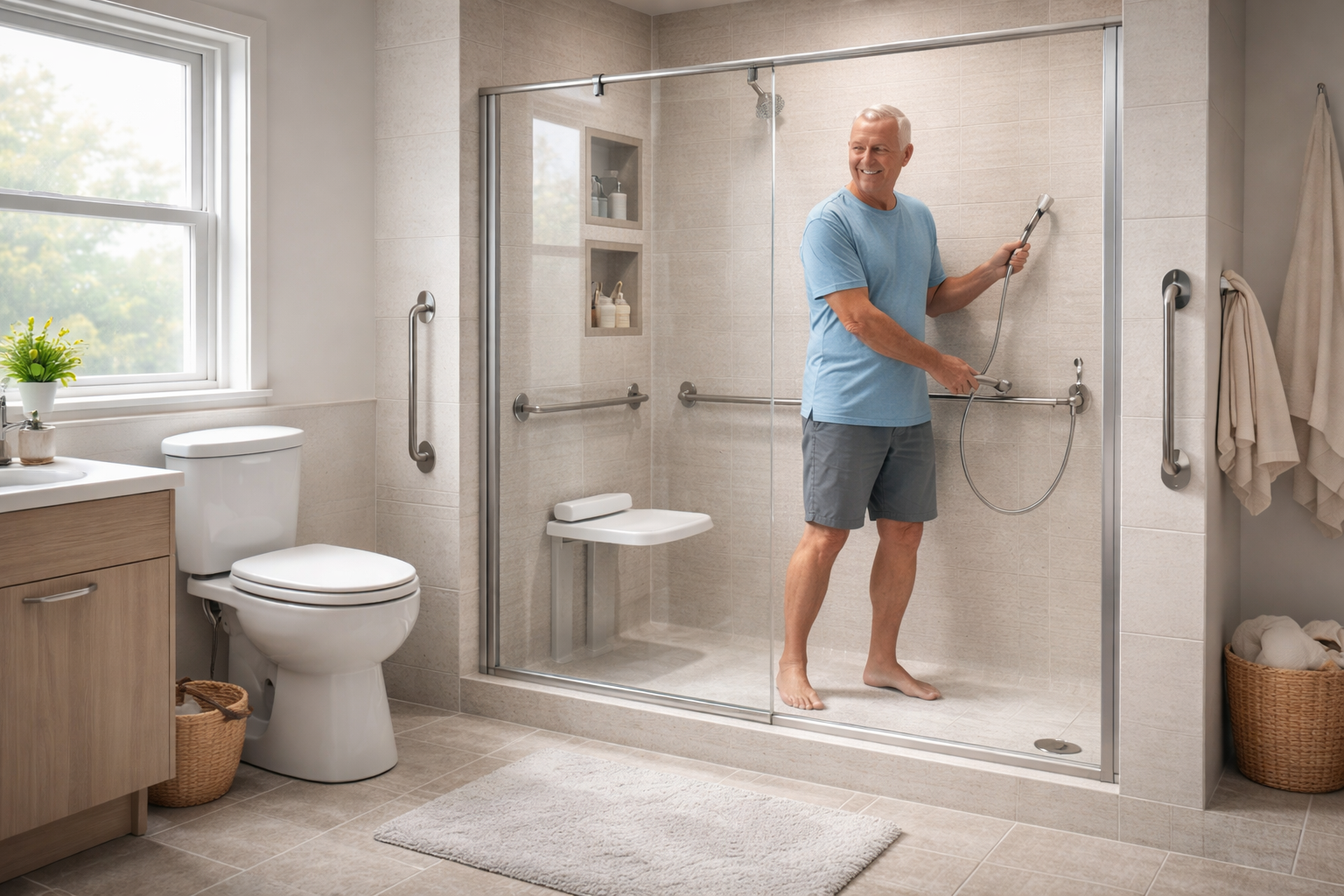
Daily routines at home hinge on small, practical details. Most people take them for granted. Stepping over a high bath edge. Reaching the sink without leaning. Moving across a wet floor. These become sources of heavy stress when mobility shifts. It’s a quiet struggle. For millions across the UK, these friction points define how independent they actually feel in their own space.
England’s population is aging. Fast. The number of people over 65 will spike in the coming decades. As physical needs change, the bathroom becomes a battlefield for safety. A slippery porcelain surface or a steep tub side turns a shower into a risky operation. It kills confidence. It ruins the quality of life.
Yet families delay. They worry about the mess of a full renovation or the eye-watering costs. Don’t wait. Seeing how mobility gaps dictate every morning habit is the first step. Practical adjustments exist. From minor tweaks to deliberate structural upgrades, modern design supports staying in your own home. It’s about autonomy. Not just plumbing.
Daily bathroom routines and the hidden impact of reduced mobility
Morning rituals take longer when joints go stiff. Gripping a traditional round tap with arthritic hands is a chore. Stepping over a 50cm bath wall requires balance that might not be there anymore. These tiny failures add up. They erode the sense of being home. Thousands in England face this slide toward dependence daily.
Bathrooms are hazardous. That’s not news. But the psychological impact is. Reduced confidence leads to skipping baths. Then comes social withdrawal. You don’t want to go out if you don’t feel clean. Falls here are a primary cause of hospital admissions for the over-65s. It starts with a slip. It ends with a long recovery. Or worse.
Carers and families usually spot the signs first. Don’t ignore the damp towel on the floor used as a mat or the shaky hand on the sink basin. Timely intervention keeps people moving. Professional design from The Walk In Bath Co solves the technical struggle of adapting tight spaces without gutting the whole house. Don’t let tight floorplans be the excuse for a dangerous bathroom.
Regional housing stock and policy context shaping accessibility
The state of British housing is a hurdle. Old Victorian terraces or mid-century semis weren’t built for wheelchairs. Or even for walking frames. Narrow doorways. High thresholds. These are built-in traps. Even new builds often miss the mark on M4(2) accessibility standards. It’s a systemic gap.
Regional differences across England are glaring. Some councils push for 40 per cent accessibility in new housing. Others lag. But most people who need help today aren’t buying new homes. They live in existing stock built sixty years ago. That’s the reality. Policy intent and lived experience are miles apart. Retrofitting is the only logical route for the majority.
The 2024 amendments to Approved Document M are a start. They reinforce requirements, but implementation is patchy. If you’re waiting for the government to fix your bathroom, you’ll be waiting a long time. Homeowners are taking matters into their own hands. They have to. It’s about re-engineering the home to sustain your independence, decade after decade.
Practical, non-structural improvements that support safety
Building work isn’t always the answer. Sometimes, the quick wins save the day. Grab rails are the obvious first move. Put them near the toilet. Put them in the shower. Check the wall strength first. They give immediate stability. Effective home adaptations often start with these small, high-impact changes.
Non-slip flooring is non-negotiable. Throw away the loose rugs. They are trip hazards masquerading as decor. Lever-style taps are a massive relief for anyone with limited hand strength. No more twisting. Just a simple push. A raised toilet seat also changes the game. It makes sitting and standing a controlled movement rather than a drop.
Shower stools offer support during long washes. Brighter lighting is another cheap fix. If you can’t see the puddle on the floor, you’re going to slip. Threshold ramps bridge the gap between rooms for walking aids. These aren’t just gadgets. They are tools for survival. Professional advice from an occupational therapist is worth its weight in gold here. They see things you don’t.
Decision-making considerations for long-term independence
Picking an upgrade is more than a shopping trip. It’s an honest audit of the future. What works today might fail in three years. Funding is out there, but it’s a maze. Disabled Facilities Grants (DFG) exist for eligible households. Apply early. The waiting lists are legendary.
Don’t wait for a crisis to act. A fall shouldn’t be the trigger for a bathroom remodel. That’s reactive and dangerous. Proactive changes allow for better design choices. You get to choose what it looks like, rather than rushing a job while you’re in a cast.
Balancing safety with aesthetics is possible now. It doesn’t have to look like a hospital ward. Modern accessible bathrooms are sleek. Functional. Invisible design is the goal. Staying informed about the latest policy and practice updates helps homeowners make decisions that last. When adaptations are based on professional insight, they blend into the home. They just work.
The Hidden Costs of Inaction
Delaying bathroom modifications has a price tag beyond money. It’s the cost of anxiety. Every time a person hesitates before entering the shower, a piece of their autonomy dies. We see this in clinical assessments all the time. The near-miss that goes unreported is a ticking time bomb.
Hospital discharge delays are often tied to the home environment. If the bathroom isn’t safe, you aren’t going home. It’s that simple. By upgrading the space now, you are essentially pre-approving your own future recovery. It’s a strategic hedge against future recovery times. It buys peace of mind for the whole family.
Local authorities are struggling with funding. Updated social care charging rules for 2026 put even more onus on the individual. If you can manage your own personal care, you stay out of the system longer. It’s a win-win. But it requires the right hardware.
Bathrooms shouldn’t be sources of daily anxiety. Small, strategic changes trade risky routines for genuine safety, ensuring your home remains the sanctuary it was meant to be. It’s a tactical investment in your own future autonomy.
