
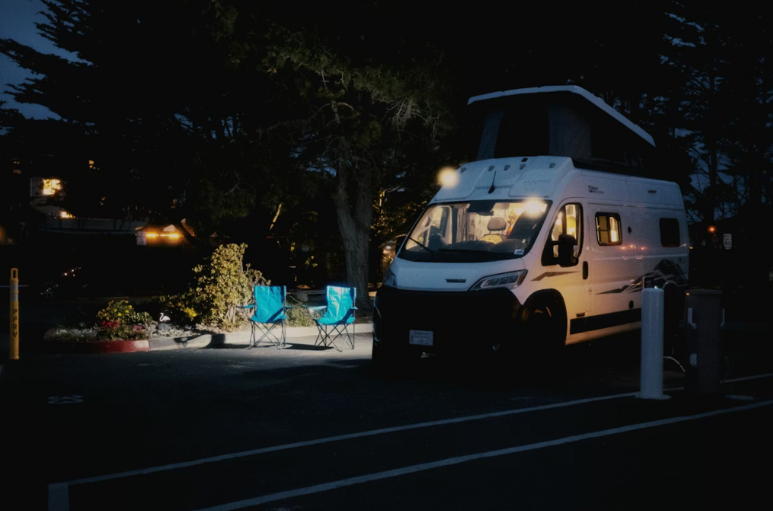
There’s a moment every campervan owner dreads. You’re parked up somewhere beautiful — the Yorkshire Dales, a quiet Cornish cove, the edges of the Cairngorms — and you wake up to find your fridge has stopped humming, your phone is dead, and your lights won’t switch on. Your battery is flat.
It’s one of the most common and most avoidable problems in campervan life, and it almost always comes down to the same thing: people don’t know how much battery capacity they actually need before they buy or build their setup.
This guide is here to fix that. We’ll walk you through how to calculate your real power consumption, explain what a leisure battery kit is and how to choose one, and help you build a setup that won’t leave you in the dark — literally.
First, What Is a Leisure Battery?
Before we get into calculations, it’s worth clarifying what we’re actually talking about. A leisure battery is not the same as the starter battery under your van’s bonnet. Your starter battery exists purely to fire up the engine — it delivers a short, sharp burst of power and is then immediately recharged by the alternator as you drive.
A leisure battery, by contrast, is designed to be discharged slowly over time and then recharged repeatedly. It’s what powers your fridge, lighting, water pump, phone chargers, and anything else you run when the engine is off. It’s built for the long game.
When people talk about a leisure battery kit, they’re usually referring to a complete package that includes the battery itself alongside the components needed to charge and manage it — typically a battery-to-battery (B2B) charger to replenish it from the alternator while driving, a battery management system (BMS), wiring, fuses, and sometimes a mains hook-up charger for when you’re on a campsite with electric. A good leisure battery kit takes the guesswork out of compatibility and is a popular starting point for first-time van builders in the UK.
Step One: List Everything You’ll Be Running
The first step in sizing your battery is making an honest list of every electrical device you plan to use. Think about a typical day in your van — not your best day or your worst day, but a normal one.
Common items to include: a 12V compressor fridge (one of the biggest draws), LED lighting throughout the van, a USB charging hub or individual phone and laptop chargers, a diesel or gas heater with an electric fan and ignition, a 12V water pump, and perhaps a 12V electric blanket or portable projector if you’re that way inclined.
For each item, you need two pieces of information: how many watts (or amps) it draws, and how many hours a day you’ll actually use it. This information is usually on the device itself or in the manual.
Step Two: Calculate Your Daily Power Consumption
Once you have your list, the maths is straightforward. Multiply the wattage of each device by the hours per day you’ll use it to get watt-hours (Wh). Add everything up for your total daily consumption.
Here’s a simple example. A 12V compressor fridge typically draws around 45 watts but cycles on and off — assume it runs for about 8 effective hours per day, giving you 360Wh. LED lighting at 20 watts for 4 hours is 80Wh. Charging a laptop once a day at 65 watts for 2 hours is 130Wh. A water pump at 60 watts for 15 minutes total is 15Wh. Add in phone charging, miscellaneous USB, and a heater fan and you’re realistically looking at somewhere between 600 and 900Wh per day for a comfortable solo or couple setup.
Now here’s the important part: you can’t use all of your battery capacity. Discharging most lead-acid and AGM batteries below 50% significantly reduces their lifespan. Even lithium batteries, which can be safely discharged to around 80–90%, benefit from not being run completely flat. As a rule of thumb, plan to use only 50% of your battery capacity for AGM, and around 80% for lithium.
Step Three: Choose Your Battery Technology
The two main types of leisure battery you’ll encounter in the UK market are AGM (Absorbent Glass Mat) and lithium (specifically LiFePO4, or lithium iron phosphate). They have meaningfully different characteristics, and the right choice depends on your use case and budget.
AGM batteries are the traditional choice. They’re cheaper upfront — you might pay £150–£300 for a decent 100Ah AGM — and they’re widely available. The downside is that usable capacity is limited to around 50%, they’re heavy, and they don’t cope particularly well with frequent deep cycling. They’ll typically last 300–500 cycles if treated well.
Lithium batteries cost more upfront — a quality 100Ah LiFePO4 might be £400–£800 — but offer around 80% usable capacity, are significantly lighter, last for 2,000–5,000 cycles, and charge much faster. For anyone planning regular or full-time use, the long-term value of lithium is hard to argue with.
Step Four: Size Your Battery Bank
Now put it all together. Take your daily consumption figure and divide it by the usable percentage of your chosen battery type to find the total capacity you need.
Using our earlier example of 750Wh per day: with AGM at 50% usable, you need 1,500Wh (or roughly 125Ah at 12V) of battery. With lithium at 80% usable, you need 937Wh (roughly 78Ah). Most people building a practical UK campervan setup end up in the range of 100–200Ah of lithium, or 150–300Ah of AGM.
It’s also worth factoring in how you’ll charge your battery. If you’ll be moving most days, alternator charging via a B2B charger is effective. If you park up for multiple days, solar becomes essential. If you stay on sites regularly, a mains hookup charger is worth including. A well-designed leisure battery kit will often cover all three charging inputs.
Don’t Forget the British Weather
One thing that catches UK van lifers out is the impact of cold weather on battery performance. AGM batteries in particular can lose a significant proportion of their capacity in winter — sometimes 20–30% at temperatures below 5°C. Lithium batteries have their own quirks: most LiFePO4 chemistries won’t charge below 0°C (the BMS will typically cut off charging to protect the cells), though they discharge fine in the cold.
If you’re planning winter adventures — and the UK has some stunning spots to explore in the colder months — factor in reduced performance and consider slightly oversizing your battery bank, or opting for a lithium kit with a built-in heating element.
A Practical Starting Point
If you’re overwhelmed by the calculations, here’s a simple starting point for most UK van setups. For weekend use with a fridge, lighting, and basic charging: 100Ah lithium or 200Ah AGM. For extended trips or full-time living: 200Ah lithium minimum, with solar to match. For families or high-consumption setups: 300Ah+ lithium, ideally with multiple charging sources.
Whatever you choose, don’t undersize to save money upfront. Running your battery flat repeatedly — especially with AGM — will destroy it quickly and cost you more in replacements than buying the right capacity in the first place. Invest in understanding your power needs properly, and your van life experience will be dramatically better for it.
