
Arsenal’s kit history is almost a football design chronicle showing the most daring works. They were among the most recognizable, influential in sports history, and the Gunners have produced some red and white combinations that have defined decades, to successful experimental away shirts that at first divided the fans’ opinion on release but now are highly valuable collector items, among other garments.
The main thing that differentiates the Arsenal kit legacy from that of the majority of other clubs is the fact that the club has always maintained a clear visual identity while at the same time carrying out genuine creative experimentation. The template of the home shirt has been evolving in a way that the changes in it in different generations of players have been minor and thus the shirt has been easily identifiable. In the meantime, the away and third kits have gone so far as the contemporary designers keep referring to them as the sources of inspiration. The resulting design archive, which owed both to tradition and innovation, is such that a lot can be discovered in it by the most attentive.
The Bruised Banana Era That Changed Everything
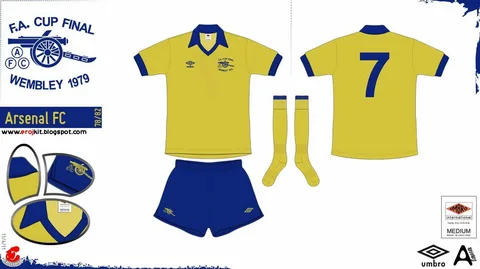
For a long time, the 1991- 93 away shirt has been the topic that comes up when discussing Arsenal kit history. The yellow and navy combination with its bold geometric pattern caused such a stir that once it was released, it has only become more and more iconic over time. The fans who weren’t quite sure what to make of it called it the “bruised banana”. The Adidas creation embodied a new daringness in how football shirts could look visually.
Indeed, the pattern was quite revolutionary in its context. A football shirt, in terms of graphics, had been very restrained, with stripes, hoops, and solid colors being the dominant elements of the design. The bruised banana brought an abstract organic pattern all over the shirt in such a fashion that it looked more like an everyday outfit than a sports uniform. The design team at Adidas must have been given such a brief that they had an extraordinary amount of liberty and they certainly made full use of it.
The Bergkamp and Henry Years Define an Era
The late 1990s and early 2000s Nike period saw the production of shirts that still stand as some of the most beautiful Arsenal shirts in the club’s history. The double, winning 1997, 98 home shirt paired classic red and white with a very fine pinstripe detail that lifted the overall design without dominating it. Simple, assured, and very quickly identifiable as an Arsenal kit, it has aged without the kind of visual awkwardness that is the downside of shirts that are too tightly linked to specific fashion trends of the period.
The 2000, 02 home shirt that was worn during the Double season has a very special place in the hierarchy. This is the shirt that Thierry Henry, Patrick Vieira, and Robert Pires wore on the pitch for the performances that most supporters of that generation would say were the club at its peak. The design of the shirt is sufficiently discreet so that the players wearing it may be regarded as the main subject rather than their performances competing with it for the visual attention. Such a level of self-control results in shirts that age better than more aggressive ones from the same period.
The Invincibles Shirt and Its Permanent Place in History
The 2003- 04 season made football history that not even a single Arsenal supporter needs to be reminded of, and the shirt that was worn by the unbeaten team of that season is still cherished so much not only for the design but also for the nostalgic feeling that it brings. The simple red and white home kit of that season is connected to one specific event in the club’s history, and supporters from all corners of the club still have very strong feelings for it, whether they like the shirt or not.
Nevertheless, the design is quite impressive on its own merit. That season, Nike came out with a home kit that was a perfect blend of modern and traditional, as it clearly showed the heritage of Arsenal’s design history. The collar, the shade of red, and the proportions of the design have all been carefully thought of rather than just being some randomchoice without any logic. It looks good in the pictures of that season, without the need to look like a piece of a particular era, which is a major thing that a good design achieves.
The fans’ emotional attachment to this shirt affects its collector value in ways that pure aesthetics don’t quite explain. Supporters who were at Arsenal during the season want to keep a memento that physically links them to what they felt at the time, and those who have become fans afterwards want to associate with the mythology. This desire for authentic merchandise is driven by both reasons, and either of them can be considered valid grounds for looking one out.
For anyone exploring vintage Arsenal shirts from this period, condition and authenticity matter considerably. The combination of emotional significance and genuine design quality makes this one of the more competitive areas of the Arsenal collector market, with accurate pricing depending heavily on whether examples are authentic originals rather than later reproductions.
Why Arsenal Kit History Continues to Influence Design
Arsenal’s design legacy is important beyond the collector market because some of their most iconic shirts revealed the potential for football design in a wider context. The bruised banana showed that abstract surface decoration could be successful even on a large scale. The Invincibles shirt was a great example of how minimalism could be taken to the next level and produce timeless results. The best work of the Nike era proved that athletic performance requirements and genuine design ambition could go hand in hand.
Today, kit designers working for clubs and manufacturers still refer to this era of football design. The confidence that characterized the best shirts of the late 1980s through early 2000s is something the industry has been trying to recapture with varying success. Arsenal’s archive is right at the heart of this reference point, hence why these shirts mean more than just nostalgia and fan attachment.
