
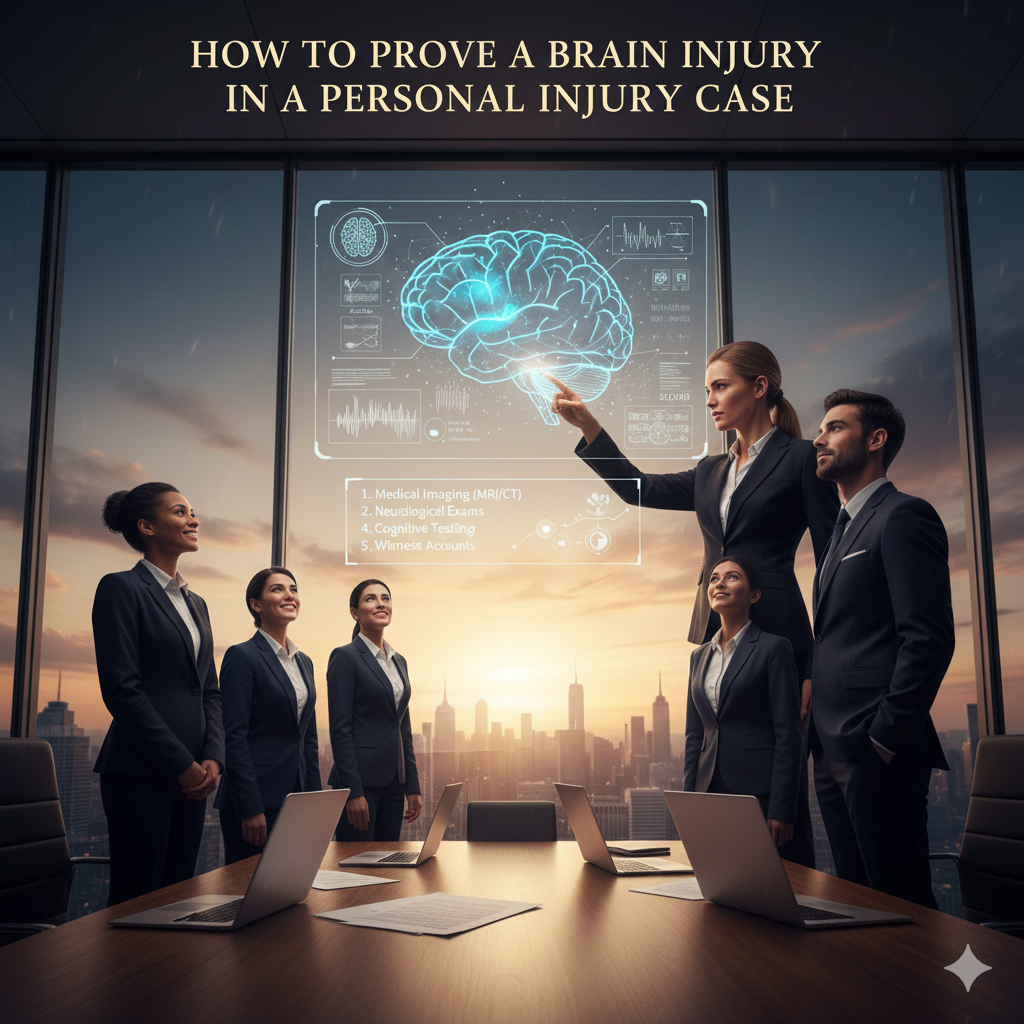
After a serious accident, one of the first concerns people have is medical. The second is legal. A brain injury attorney Los Angeles clients trust will often explain early on that proving a brain injury is very different from proving a broken bone or visible trauma. Brain injuries are frequently invisible, delayed, and misunderstood by insurance companies. Yet they can be among the most life-altering injuries a person suffers.
Successfully proving a brain injury in a personal injury case requires medical evidence, consistent documentation, expert analysis, and a clear link between the accident and the symptoms. Without that foundation, even legitimate claims are often minimized or denied.
Why Brain Injuries Are Challenging to Prove
Brain injuries do not always show up on standard imaging. Many people walk away from accidents believing they are fine, only to develop headaches, cognitive issues, mood changes, or memory problems days or weeks later.
Insurance companies rely heavily on this delay. They argue that:
- There was no immediate diagnosis
- Imaging was “normal”
- Symptoms are subjective
- The injury must have another cause
None of these arguments reflect medical reality, but they are commonly used to reduce payouts. Proving a brain injury means anticipating these tactics and building evidence that tells the full story.
Step One: Establish the Accident Mechanism
Every brain injury case begins with how the injury occurred. The mechanics of the accident matter.
Strong cases clearly document:
- The force of impact
- Whether the head or neck was involved
- Sudden acceleration or deceleration
- Loss of consciousness or altered awareness
- Confusion at the scene
Car accidents, falls, pedestrian impacts, and violent jolts can all cause traumatic brain injury even without a direct blow to the head. Whiplash-type forces alone are sufficient to injure the brain.
Accident reports, witness statements, photographs, and vehicle damage all help establish that the event was capable of causing a brain injury.
Step Two: Medical Records That Show Symptom Progression
One of the most important elements in proving a brain injury is consistency. Medical records should reflect ongoing complaints that make sense over time.
Key documentation includes:
- Emergency room records
- Primary care visits
- Neurology evaluations
- Physical therapy or cognitive therapy notes
- Referrals for imaging or testing
Symptoms such as headaches, dizziness, memory lapses, slowed thinking, emotional instability, and sleep disruption must appear repeatedly in records. Gaps in treatment are often exploited by insurers, even when symptoms were present.
A brain injury attorney Los Angeles victims rely on understands how to identify missing links in medical documentation and address them properly.
Step Three: Diagnostic Testing and Imaging
Imaging does not have to be dramatic to be meaningful. While CT scans are useful for detecting bleeding or fractures, many traumatic brain injuries are only visible on MRI or through advanced neurological testing.
Helpful diagnostic tools may include:
- MRI scans
- Neurocognitive testing
- Vestibular and balance assessments
- EEGs in certain cases
Even when imaging is normal, neuropsychological testing can demonstrate measurable cognitive impairment. These results often carry significant weight in brain injury cases.
Step Four: Expert Medical Testimony
Brain injury claims frequently require expert testimony. Treating physicians and retained specialists help explain what imaging alone cannot.
Experts may testify about:
- How the injury occurred
- Why symptoms were delayed
- The connection between the accident and cognitive deficits
- Long-term prognosis
- Whether the injury is permanent
Insurance companies often hire their own experts to downplay injuries. Having credible medical professionals who understand brain trauma is essential to countering these opinions.
Step Five: Demonstrating Daily Life Impact
Proving a brain injury is not just about diagnosis. It is about showing how the injury affects real life.
Evidence may include:
- Difficulty performing job duties
- Reduced productivity or lost employment
- Struggles with memory or concentration
- Personality or emotional changes
- Strained relationships
- Inability to tolerate screens, noise, or stress
Testimony from family members, coworkers, and supervisors often helps illustrate changes that medical records alone cannot capture.
Step Six: Connecting the Injury to Financial Loss
A brain injury attorney Los Angeles clients depend on must also prove damages. Brain injuries frequently result in long-term financial consequences, even when outward recovery appears good.
Compensable damages may include:
- Medical expenses and future care
- Lost income and reduced earning capacity
- Therapy and rehabilitation costs
- Pain and suffering
- Loss of enjoyment of life
Insurance companies routinely undervalue these losses, particularly when injuries are cognitive or emotional rather than physical.
Common Mistakes That Hurt Brain Injury Claims
Several missteps can seriously weaken a case:
- Delaying medical care
- Minimizing symptoms to doctors
- Stopping treatment too early
- Relying solely on early imaging
- Giving recorded statements without legal guidance
Brain injuries require persistence, not toughness. Downplaying symptoms almost always benefits insurers, not victims.
Why Legal Experience Matters in Brain Injury Cases
Brain injury claims are medically complex and aggressively defended. They require a legal strategy that accounts for delayed symptoms, evolving diagnoses, and long-term consequences.
A skilled brain injury attorney Los Angeles understands how to build cases that reflect how brain injuries actually work, not how insurance companies wish they did.
Protecting Your Case and Your Future
Proving a brain injury is about credibility, documentation, and clarity. When done correctly, it can secure compensation that reflects the true impact of the injury.
Bojat Law Group represents individuals whose brain injuries were questioned, minimized, or ignored. If you are experiencing lingering symptoms after an accident, legal guidance can help protect both your health and your rights.
Call (818) 877-4878 for a free consultation with a brain injury attorney Los Angeles victims trust.
